
These are the nominees who were chosen for induction into the Traditional Bowhunters Hall of Fame class of 2025. They were nominated by their peers and below you will find a brief biography of each inductee.
Jerry Pierce • Joel Riotto • Dick Robertson • Vern Struble • Bill Terry
Don Thomas • Barry Wensel • Gene Wensel • Dave Whiting
Legacy Inductees
Paul Schafer • Jack Whitney

Jerry Pierce
1935 – 1999
Jerry Pierce was a quiet example of the best values and spirit of traditional bowhunting, his life defined by precision, skill, humility, and boundless generosity. A talented machinist from Mississippi, who worked for Caterpillar Tractor Company, his expertise helped him become the highest-paid hourly employee in a very large corporation by the time he retired.
As a bowyer, Jerry created the revered Choctaw recurve, which captured the admiration of traditional archers nationwide, graced the covers of national magazines, and gained renown as the coveted “Bow That Money Can’t Buy”. He famously spray-painted his own bow flat black to camouflage its exquisite tropical wood highlights—only hinting at the beauty below where his hand had worn through the layer of paint. His innovation—beautiful, delicate, exotic wood inlays crafted into the riser, which became known as “Pierce Points”— inspired other top bowyers to adopt the design, with Jerry willingly giving his blessing and sharing the technique behind the design.
Although he never sold a single bow, Jerry donated dozens over the year to chosen organizations he cared about, like the Professional Bowhunters Society (PBS), the United Bowhunters of Missouri, Illinois, and Kansas, and even to The Dream Factory to help raise thousands of dollars to promote traditional bowhunting…one bow at a time. Taking up to 80 hours to meticulously craft and finish a Choctaw recurve, one friend reflected that, “Each bow included a piece of Jerry’s soul.”
In life and craft, Jerry was self-effacing, unwaveringly ethical, and incredibly generous—a man whose powerful standard of integrity quietly shaped the traditional bowhunting community for the better. He was mentor, ally, and friend to countless bowhunters, leading by example rather than words.
Jerry loved chasing whitetails and small game as much as sharing that love, and his bows, with his community. For his lasting impact—in craftsmanship, mentorship, and traditional bowhunting values, Jerry Pierce is profoundly deserving of induction into the Traditional Bowhunters Hall of Fame.

Joel M. Riotto
1942-
For nearly seven decades Joel Riotto has exemplified the highest standards of traditional bowhunting. His fair chase pursuits have taken him across North America and Africa, where he has successfully hunted species including, but not limited, to black bear, moose, elk, caribou, mule deer, whitetail deer, javelina, hogs, pronghorn antelope, kudu, gemsbok, eland, wildebeest, impala, warthog and more.
Joel is a decorated Vietnam Veteran who, upon his return to New Jersey, became a successful, second generation, commercial real Estate Broker and operated his own company in Bergen County, New Jersey. He remained an active broker for 54 years.
Joel joined the Bergen Bowmen in 1976, later serving as president, vice president and secretary. He joined the Professional Bowhunters Society in 1978, became a life member in 1992, and served as chairman for various committees and has attended most banquets. He also fostered, organized, and ran the PBS Catskill Mountain Membership hunt for the last three years. He founded the Traditional Archers of New Jersey in 1992 where he held multiple leadership roles including President, Treasurer, and newsletter editor.
An accomplished writer, Joel has been contributing to leading publications since the late 1970’s. His articles have appeared in Traditional Bowhunter Magazine, Bowhunter Magazine, Archery World, Bear Hunting, and Full Draw as well as the PBS Magazine. His writings blend storytelling with education, always emphasizing ethics, wildlife management, and the deeper values of bowhunting.
Joel and his wife Noreen divide their time between homes in Demarest, New Jersey, and Andes, New York. Together they enjoy their four children and five grandsons.
Dick Robertson
1953 –
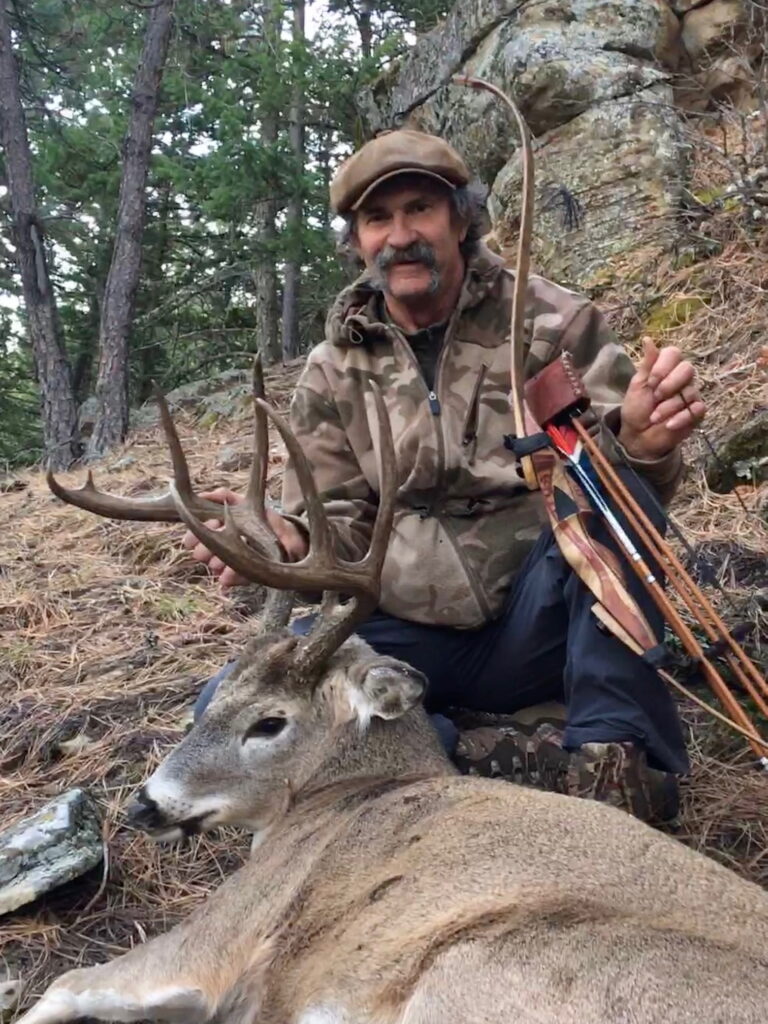
Dick Robertson is a respected American bowyer, hunter, and craftsman whose name has become synonymous with the artistry and performance of traditional bows. Based in Montana, Robertson has spent decades building recurves and longbows that are not only highly functional in the field but also works of art in their own right. His company, Robertson Stykbow, has earned a reputation as one of the finest custom bowmaking shops in the world, serving hunters and collectors alike.
Robertson’s passion for archery began at a young age, and he quickly developed both a love for hunting and an appreciation for handcrafted equipment. By the late 1970s and early 1980s, he had established himself as a bowyer of distinction. His bows became known for their combination of beauty, balance, and power—each crafted with painstaking attention to detail. Many of his recurves and longbows incorporate exotic woods, fine craftsmanship, and design refinements that make them stand out as both functional hunting tools and heirloom-quality equipment.
Beyond bow building, Dick Robertson is a lifelong hunter with a deep appreciation for fair chase and wilderness adventure. He has hunted big game across North America and beyond, always emphasizing respect for the animals and the environment. His philosophy mirrors that of many traditional archery icons: that the real reward of bowhunting lies in the challenge, the patience, and the connection to nature.
Robertson has also been generous with his time and knowledge, mentoring countless hunters and bowyers through personal instruction, articles, and appearances at traditional archery gatherings. His influence extends across generations of traditional bowhunters who admire not only his craftsmanship but also his values and dedication. He is a founding member of both the Montana Traditional Bowhunters (MTB) and the Montana Bowhunters Association (MBA). Dick is also a long-time Life Member of the Professional Bowhunters Society (PBS) and a member of Compton Traditional Bowhunters (CTB).
Today, Dick Robertson’s bows remain highly sought after, and his legacy as both a master craftsman and dedicated hunter continues to inspire the traditional archery community worldwide. Dick has very strong family bonds and for many years he has shared the success of his business with his wife Vikki, son Yote, and daughter Yana. Dick’s bow building spans more than 45 years and his influence on thousands of people is a statement to his deep dedication to preserving the culture and challenges of hunting with traditional archery equipment.

Vern Struble
1925 – 2013
For more than half a century, Vern Struble embodied the very best of traditional bowhunting—ethical, skilled, generous, and dedicated to passing on the heritage of the bow. Over his 55 years afield, Vern harvested Columbian black-tailed deer, mule deer, whitetails, Roosevelt and Rocky Mountain elk, black bear, Barren Ground caribou, Alaska moose, and wild turkey with traditional tackle. He pursued game across Alaska, California, Idaho, Oregon, North Dakota, South Dakota, and Wyoming, taking over 40 big game animals, though he often reminded others that success in bowhunting was measured not in trophies but in the experiences of the hunt.
Equally important as his personal hunting was Vern’s lifelong commitment to education, mentorship, and leadership. A founding member of the Benton Bowmen Archery Club in Corvallis, Oregon, Vern guided the club in securing land and developing a premier facility. He established and ran the 4-D Archery Shop, and for 33 years coordinated Benton County’s 4-H archery program, directly teaching more than 1,100 students. He also served as a longtime Oregon Hunter Safety instructor, a leader in Oregon Bowhunters, and a respected Councilman and Vice President of the Professional Bowhunters Society (PBS).
Vern’s influence extended nationally. He chaired PBS gatherings, mentored future leaders—including several national and state presidents—and received the society’s highest honors: the Shupienis Award and the John Rook Inspirational Award. His efforts before the Oregon Fish and Wildlife Commission helped secure statewide archery seasons, ensuring opportunities for future generations.
Widely admired for his sportsmanship, craftsmanship, and integrity, Vern was as comfortable teaching a youngster to sharpen a broadhead as he was testifying in a legislative hearing. Behind him always stood his wife, Fran, who shared in his archery shop and organizational work. Together they left a legacy of mentorship, conservation, and tradition.
As one friend observed, “The spirit of the simple wooden bow coursed through Vern Struble’s veins.” His life remains a model of what it means to be a traditional bowhunter. Vern was able to hunt well into his mid-80’s, and he did so with great enthusiasm and purpose. Even in later years he was eager to help others improve their bowhunting skill and woodsmanship. He was truly a class act and someone who “walked the walk” and educated through example.

Bill Terry
1941 –
Bill Terry, Sr. of Monroe, Connecticut, has spent more than seven decades devoted to traditional bowhunting. Now 84, Bill has hunted with longbows, recurves, and selfbows for 74 years, pursuing game across 27 states, six Canadian provinces, and Africa. His bowhunting record includes countless North American big and small game animals and African plains game over his bowhunting lifetime.
A retired electrician and proud U.S. Marine Corps veteran, Bill has given back tirelessly to the lifestyle. He has been a certified NBEF bowhunter education instructor and has led seminars on arrow building and traditional equipment at club events. At the Algonquin Archery Association, he founded the “Knock-a-Block” shoots, helped establish a thriving Junior Olympic Archery Development (JOAD) program, and continues to mentor new bowhunters. Many, including his most recent student, have joined the Professional Bowhunters Society through his guidance.
Bill’s leadership in archery organizations is extensive. He is a Life Member of the Algonquin Archery Association, Compton Traditional Bowhunters, and the Professional Bowhunters Society, a Senior Member of the Pope & Young Club, and a founding member of the United Bowhunters of Connecticut. Over four decades of service on boards of directors and club committees, he has organized events, taught youth, and recruited new members into national and local organizations. His efforts also secured equipment donations for schools and community programs, and he has personally donated bows and arrows to countless archers.
In recognition of his lifetime contributions, Bill received the prestigious Glenn St. Charles Award from the Professional Bowhunters Society. A devoted husband of 64 years to his wife Kathy, a mentor, craftsman, and conservation advocate, Bill Terry stands as a true steward of traditional bowhunting tradition.

Don Thomas
1948 –
E. Donnall “Don” Thomas, Jr. has lived a life defined by adventure, craftsmanship, and storytelling, earning his place as one of the most influential voices in modern traditional bowhunting. A physician by training, Thomas eventually shifted from medicine to writing full-time, allowing him to dedicate his life to the pursuits he loves most: hunting, fishing, and wild places. His experiences in the field—ranging from the mountains of Alaska and the plains of Africa to the rivers and coastlines of Latin America and Siberia—have shaped a body of work that blends personal narrative with a deep respect for wildlife, ethics, and conservation.
As a prolific outdoor writer, Thomas has contributed countless essays and features to respected publications, including Traditional Bowhunter, Gray’s Sporting Journal, Retriever Journal, Strung, Sports Afield, Pheasants Forever, Montana Outdoors, Shooting Sportsman, and Big Sky Journal. He wrote a regular back page column for Ducks Unlimited until he was fired for speaking truth to power. He also served as Co-Editor of Traditional Bowhunter Magazine, where his thoughtful prose and commitment to fair-chase principles inspired generations of archers and hunters.
Thomas has authored numerous influential books that reflect his passion for both the hunt and the written word. Among these are Traditional Bows and Wild Places, which captures the spirit of bowhunting adventure; Longbow Country, a tribute to the simplicity and challenge of the longbow; and The Double Helix, a novel that blends his medical background with his gift for storytelling. His works consistently celebrate not only the pursuit of game but also the landscapes, traditions, and friendships that define the bowhunting life.
He considers his marriage to his wife, Lori, who is also an accomplished bowhunter and angler, the highlight of his life. Now that eye problems make it hard for Don to manage a camera, she handles a lot of the photography that accompanies his writing.
Respected for his integrity and eloquence, Don Thomas has become more than an outdoorsman; he is a teacher, historian, and ambassador for traditional bowhunting. Through his writing, he continues to inspire bowhunters to value the journey as much as the harvest, carrying forward the timeless ideals of adventure and respect for the natural world.

Barry Wensel
1944-Barry Wensel is a renowned American bowhunter, author, and innovator whose passion for traditional archery has influenced generations of hunters. Alongside his twin brother, Gene, Barry grew up in New England chasing whitetails with stickbows, developing a deep respect for wildlife and the art of hunting. His shared dedication to the bowhunting lifestyle brought him west to Montana in the early 1970s, and eventually to rural Iowa from the year 2000 until present for no other reason than to bowhunt big whitetails.
Barry became especially well known for his expertise in hunting fully mature whitetail bucks. His intimate understanding of deer behavior and his willingness to share woodsmanship and bowhunting ethics set him apart as both a skilled hunter and educator. In the early 1980s, Barry was featured in the groundbreaking video “Bowhunting October Whitetails”, which instantly became a classic in the bowhunting community. The film pioneered not only bowhunting success but also his philosophy of patience, respect for nature, and the value of traditional archery. To this day, it remains one of the most influential whitetail hunting video productions ever made.
In addition to his film work, Barry has authored numerous articles and books on bowhunting. His writing blends the practical application of bowhunting with humor, personal stories and reflections on the deeper meaning of hunting. His decades of educational seminars, speaking engagements, and willingness to share, have further cemented his reputation as one of the sport’s great communicators.
Barry’s legacy is rooted not just in his personal achievements in the timber, but in the countless bowhunters he has mentored and inspired for many decades. By championing fair chase values and the challenges of traditional equipment, he has kept alive the heritage of bowhunting for future generations.
Today, Barry Wensel is remembered as a master woodsman, a classic storyteller, and a powerful ambassador for the traditional bowhunting lifestyle.

Gene Wensel
1944-
Gene Wensel is an iconic bowhunter, author, conservationist and outdoorsman whose name is synonymous with traditional archery and fair chase hunting for all the right reasons. Born in Pennsylvania and raised in the hills of New England, Gene developed an early fascination with wildlife and the great outdoors. He and his twin brother, Barry, never got caught up in the high-tech archery craze, but instead grew up using longbows and recurves, quickly forming a conservative bond in simple archery that deeply influenced and guided their entire lives and careers.
In the early 1970s, Gene, Barry and their families moved to Montana to immerse themselves into the heart of big game country. Settling in the Bitterroot Valley, Gene soon built a reputation as one of the most serious and dedicated traditional bowhunters in North America. He became instrumental as one of the founding fathers of the Montana Bowhunters Association. He was especially known for his skills in hunting mature whitetail deer, earning respect not only for the animals he harvested but also for the deep admiration he carried for the land and game he pursued. He has spent over 65 years passionately writing, scouting, studying and hunting wild whitetail deer. His in-depth analysis of whitetail behavior while pursuing them with traditional gear set his writings apart from most of the “clone” books and articles on whitetail deer.
Beyond his success in the field, he captured the mood of a passionate advocate of traditional archery, as he puts it, “doing it the right way, for the right reasons.” Gene was the original designer of the 3:1 ratio Wensel Woodsman broadhead. He authored multiple influential books, a total of five titles strictly about whitetails, all while carrying traditional gear. He defined woodsmanship instruction, opinions, stories and reflections with his personal bowhunting philosophy. His writings and seminars have since inspired generations of hunters to try traditional equipment while focusing on the challenge and intimacy it provides.
A proud member of organizations dedicated to bowhunting heritage and ethics, Gene has always emphasized the values of respect for game, humility and stewardship. His storytelling ability and humor, combined with decades of experience, made him one of the most beloved voices in America’s bowhunting community.
Today, Gene Wensel’s legacy endures not only in his books, films and adventures, but also in the countless people he has mentored and unselfishly inspired. He remains a powerful ambassador for traditional bowhunting and the timeless pursuit of connecting deeply with our God-given instincts, nature and the outdoors.

Dave Whiting
Dec 21, 1956–
Dave Whiting from Australia was 13 years of age in 1969 when he purchased his very first bow, a solid fiberglass 45lb. recurve. Within 12 months he was introduced to bowhunting and so began an outstanding 56 year journey where he would hunt in every state in Australia and become the most prolific bowhunter of small game in the nation’s archery history, using only traditional gear.
Dave’s dedication to bowhunting through magazine covers and dozens of articles, executive positions in prominent clubs, running seminars, hosting dozens of international guests plus hundreds of beginner bowhunters in the field at his own costs while imparting his bowhunting skills and experience. His personal tally of game taken include many in record class (including a 16 year unbeaten Fallow Deer record taken with trad gear), with foxes being a main focus and him being dubbed nationally known name as the “Master of the Fox.”
In 1986, Dave became a foundation member of Trophy Takers, then 1988 to 2017 as Chairman of the national bowhunting game trophy rating body…Australia’s equivalent of the Pope & Young Club. His dedication, enthusiastic respected leadership, huge input commitment of office for 31 years, recognizes Dave as the longest serving Australian Archery executive in the sports history.
He has missed only one of the Trophy Takers Annual Awards held across Australia at different locations. An amazing feat by itself, considering the huge distances and personal costs involved.
Dave Whiting is a Living Legend of all Australian Bowhunting, justly earned, totally respected and the prime acknowledged International representative of the sport in Australia. His possibly “never to be repeated” successes with traditional bowhunting, huge long-time input into the sport plus dedicated service to the development of bowhunting in Australia plus personal hosting and tutoring of others… is nationally known with admiration and respect.
Legacy Inductees 2025
Paul Schafer
(1945–1993)
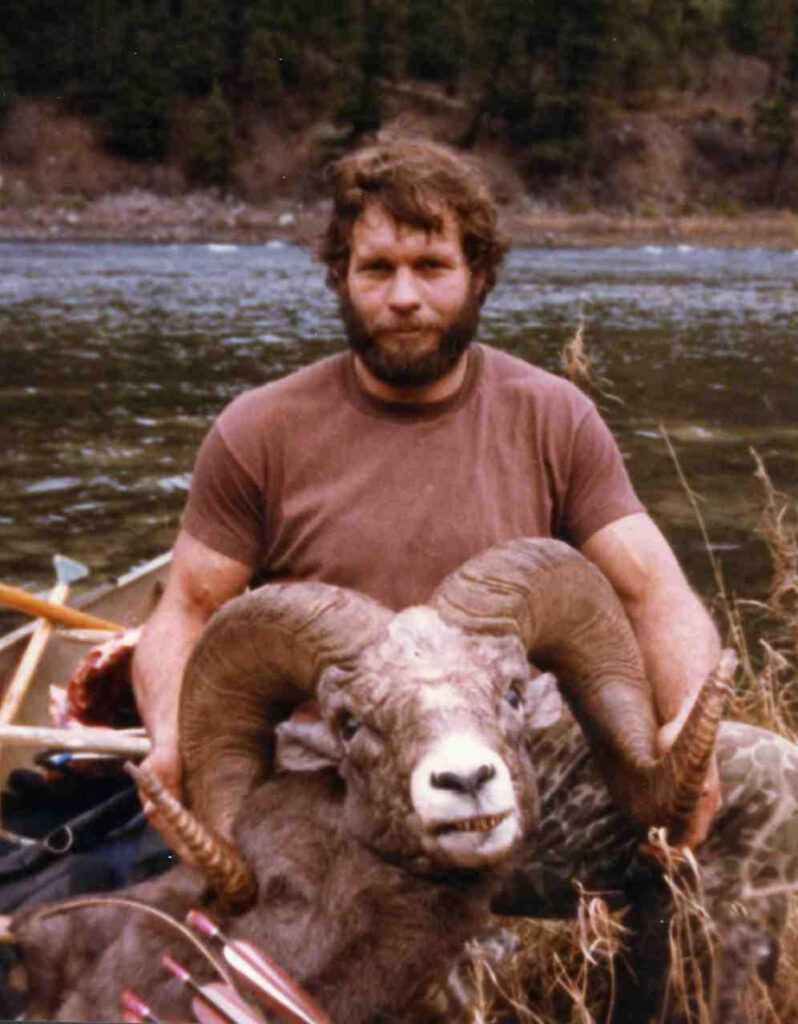
Paul Schafer was a legendary American bowhunter, guide, and bowyer whose life embodied the rugged spirit of traditional archery. Born and raised in Montana, Schafer grew up in the heart of the Rocky Mountains, where hunting and outdoor adventure became central to his life from a young age. His deep respect for wildlife and the wilderness shaped not only his approach to hunting but also his reputation as one of the most ethical and skilled outdoorsmen of his generation.
Schafer’s passion for archery led him to handcraft traditional bows, which quickly gained a reputation for their unmatched power, smooth shooting, and durability. He founded Schafer Silvertip Bows, and his recurves remain prized possessions among traditional archers to this day. As a side note, he donated many of those bows to state and national organizations. His craftsmanship was matched only by his skill in the field; he was renowned for his uncanny ability to stalk and harvest game in some of the most demanding mountain terrain in North America. Elk, mule deer, and bear were frequent pursuits, though Schafer’s hunts always emphasized fair chase and respect for the animals he pursued.
More than just a hunter, Schafer was a mentor and inspiration to countless archers and outdoorsmen. As a keynote speaker at many state bowhunting events and by demonstrations and seminars at sports shows, his influence reached thousands. His humility, toughness, and authenticity set him apart, and stories of his hunts continue to be retold in traditional bowhunting circles. Even after his untimely death in 1993 from a skiing accident, his influence has endured. His bows are still built in his style, and his philosophy of simplicity, respect for nature, and dedication to traditional archery continues to inspire new generations.
Paul Schafer’s life remains a benchmark in the bowhunting community—a reminder that the pursuit is not just about the harvest, but about the challenge, the wilderness, and the respect owed to both.
Jack Whitney
1916 – 2006
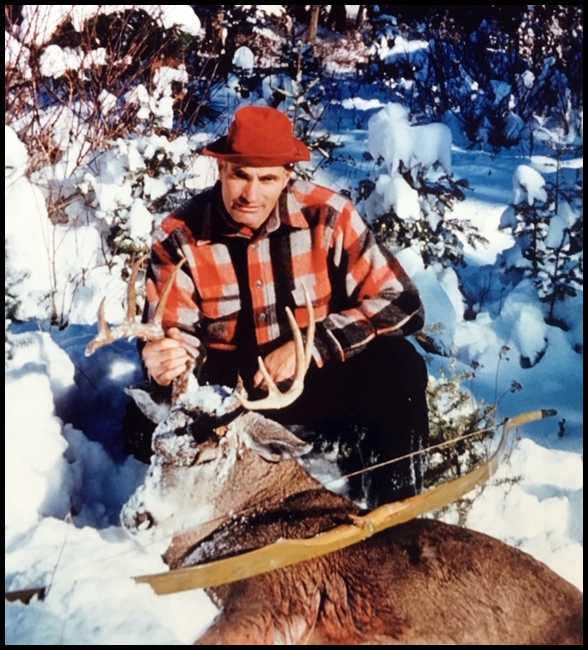
Jack Joy Whitney remains one of Montana’s most admired traditional bowhunters—a man whose life seamlessly united woodsmanship, conservation, craftsmanship, and community service. Born October 31, 1916, in Ronan, Montana, Whitney spent his youth in Bigfork, where the hills and river bottoms surrounding his family’s home fostered an early reverence for wild country. Although he did not begin bowhunting until adulthood—after receiving his first bow as a Christmas gift from his wife—Whitney took to archery with natural intensity, teaching himself to shoot, hunt, and craft equipment with the precision that became his hallmark.
From his home along the Swan River, Whitney explored the Jewel Basin, Swan Range, and Bob Marshall Wilderness, places that shaped his identity as a hunter and naturalist. His back deck overlooked both the river and the walking trail he later helped create, a constant reminder of his connection to the land. In these mountains, Whitney refined an approach to bowhunting grounded in stealth, patience, and deep familiarity with animal behavior—qualities associated with the “Golden Era” of traditional archery and the fair-chase ethos he championed throughout his life.
Whitney earned a reputation as one of Montana’s most successful mountain hunters. He is widely credited with harvesting more mountain goats with a bow than any other hunter in the state’s history, a feat that reflected both his physical endurance and disciplined shot selection in demanding alpine terrain. His 1959 whitetail deer won a Montana Bowmen award, and he claimed multiple state archery tournament trophies. Just as importantly, he shared his skills generously, mentoring young bowhunters and bowyers, including helping shape the early work of Bozeman bowyer Bob Savage, whose influence would later extend to master bowhunters such as Paul Schafer.
Yet Whitney’s legacy reaches far beyond personal hunting accomplishments. He was a founding force behind the Montana Audubon Society, the Flathead Wildlife Association—where he served as president—and the Montana Hunting Heritage Foundation, earning each organization’s highest conservation honors. His decades of advocacy and volunteer labor helped establish the Jewel Basin Hiking Area, the Swan River Trail, and the Sprunger-Whitney Nature Trail, ensuring lasting public access to Montana’s backcountry.
Jack Whitney passed away on September 25, 2006, just weeks before his 90th birthday. As the first inductee into the Montana Bowhunter Hall of Fame, he left behind not only trails and protected landscapes, but also a model of ethical hunting rooted in humility, respect, and harmony with the wild.